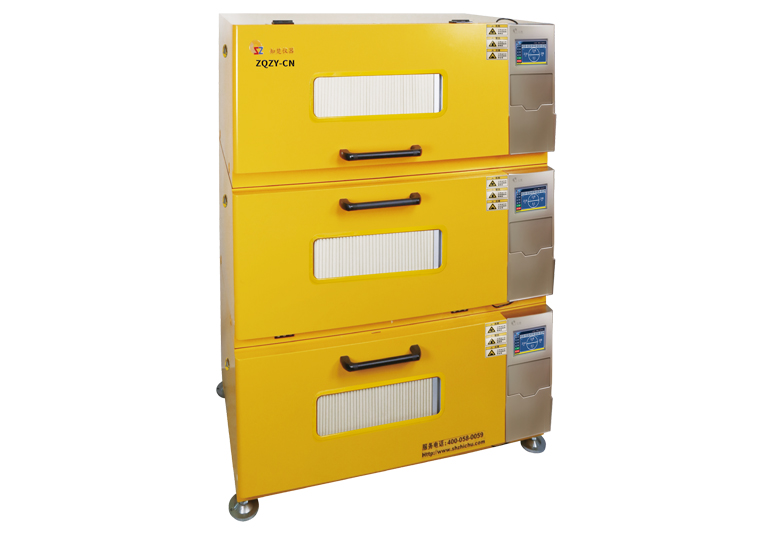
CHO cell expression is highly sensitive to the culture environment — oxygen transfer, CO₂/pH stability, temperature uniformity, and nutrient mixing all affect viable cell density and productivity. A CO2 incubator shaker combines controlled incubation with continuous agitation, helping labs reduce gradients and improve reproducibility compared to static culture. This guide explains the core performance advantages, how a CO2 incubator orbital shaker supports higher-yield workflows, and what to evaluate when selecting equipment for protein expression.
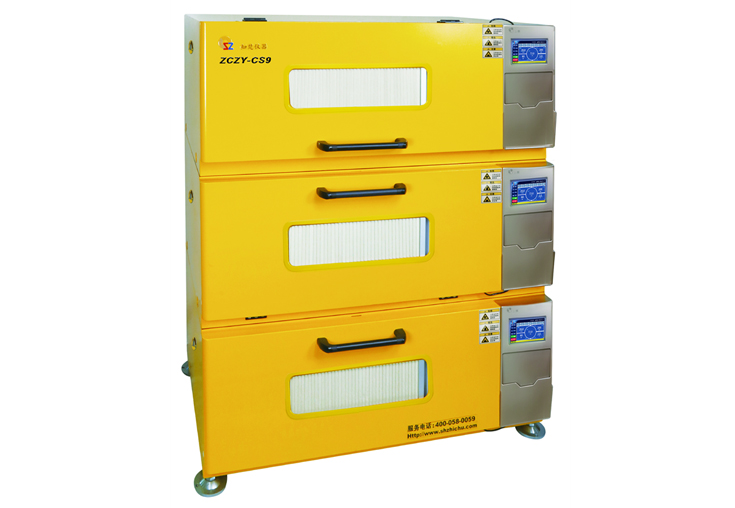
CO2 Incubator Orbital Shaker vs. Static Culture: Why Mixing Drives Better CHO Performance
What Static Culture Struggles With
In a static flask culture, cells settle and the media stratifies. As CHO cells consume nutrients and produce metabolic byproducts, local gradients build up faster than diffusion can equilibrate them.
| Gradient Type | What It Causes in Static Culture | Effect on CHO Performance |
|---|
| Oxygen depletion at the cell layer | Hypoxic microenvironment near the cells | Reduced growth rate; metabolic stress; increased lactate |
| CO₂/pH gradient | Cells near the surface see different pH than those at the bottom | pH-induced stress; inconsistent growth across the flask |
| Nutrient depletion zones | Local glucose depletion before well-mixed regions | Uneven growth; reduced peak VCD |
| Temperature stratification | Vertical temperature differences in a tall static vessel | Uneven growth conditions |
Why Orbital Shaking Changes the Outcome
Continuous orbital agitation in a CO2 incubator orbital shaker eliminates static gradients by creating a bulk flow pattern that continuously renews the media-gas interface and redistributes nutrients, metabolites, and dissolved gases across the entire culture volume.
The practical consequence is measurable: labs transitioning from static to orbital shaker culture consistently report higher peak viable cell density (VCD), more consistent doubling time, and lower run-to-run variability — all from the same cell line and media, with the same CO₂ and temperature control. The difference is mixing.
CO2 Incubator Shaker Oxygen Transfer: The Hidden Yield Lever
Why Oxygen Transfer Rate Limits CHO Productivity
CHO cells in fed-batch expression can reach viable cell densities of 10–30 × 10⁶ cells/mL. At these densities, oxygen consumption rate increases dramatically. In a static culture, oxygen transfer relies entirely on diffusion through the media surface — a slow process that cannot keep pace with high-density consumption.
An oxygen-limited culture shifts metabolism from efficient oxidative phosphorylation toward less-efficient glycolysis, producing lactate that acidifies the media and inhibits growth. The result is a VCD plateau and reduced titer — not from genetics or media composition, but from physics.
How Orbital Shaking Improves Oxygen Transfer Rate (OTR)
| Factor | Effect on OTR | Control Variable |
|---|
| Shaking speed (RPM) | Higher RPM increases surface renewal rate → better gas-liquid exchange | Optimize for OTR without excessive shear |
| Orbital diameter | Larger orbit creates more vigorous surface movement at the same RPM | Equipment selection parameter |
| Fill volume | Lower fill ratio increases headspace and surface area relative to liquid | Set at 20–30% of flask nominal volume for suspension culture |
| Vessel geometry | Baffle design and flask shape affect wave formation | Baffled flasks increase OTR significantly |
Practical Optimization
For CHO suspension culture in Erlenmeyer flasks in a CO2 incubator shaker, typical starting conditions are 100–180 RPM on a 25 mm orbit diameter, at 20–25% fill volume. These are starting points — the right combination for your specific cell line and media requires a short optimization experiment measuring VCD, viability, and glucose/lactate profiles.
CO2 Incubator Orbital Shaker Control: Environmental Stability for Consistent Expression
Why Environmental Control Quality Determines Reproducibility
A CO2 incubator shaker must maintain three simultaneous controlled conditions: CO₂ concentration, temperature, and humidity. Any instability in these parameters creates batch-to-batch variability that cannot be attributed to the biological process.
| Environmental Parameter | Typical Target for CHO | Effect of Instability |
|---|
| CO₂ | 5–8% depending on media buffering | pH shift → metabolic stress → inconsistent growth rate |
| Temperature | 37°C ± 0.5°C | Temperature excursions stress cells; affect enzyme kinetics |
| Humidity | 85–95% RH | Evaporation concentrates media in small volumes; affects osmolality |
How Stability Translates to Higher Yield
CHO cells do not produce maximum titer under stress. Every CO₂ fluctuation that shifts pH, every temperature excursion that slows enzymatic reactions, every evaporation event that concentrates metabolic waste — each produces a small growth inhibition. Over a 10–14 day fed-batch run, the cumulative effect of these micro-stresses can reduce titer by 15–25% compared to a run with tighter environmental control.
A well-designed CO2 incubator shaker with rapid CO₂ recovery after door opening, tight temperature uniformity across the chamber, and stable humidity control converts consistent biology into consistent outcomes.
Contamination Prevention Workflow
| Control Point | Best Practice |
|---|
| Door opening discipline | Minimize duration; batch all additions for one opening |
| Flask handling in the cabinet | Never place flasks on the floor; use dedicated trays |
| Platform and clamp cleaning | Wipe with 70% ethanol before and after each use |
| Chamber decontamination | Follow manufacturer protocol; H₂O₂ vapor or UV where available |
| Water tray management | Use sterile water; change on defined schedule to prevent biofilm |
CO2 Incubator Shaker Scale-Up Path: From Flask to Bioreactor
How Shaker Culture Supports Downstream Scale-Up
The value of a CO2 incubator shaker extends beyond individual experiments — it creates the controlled, well-characterized data foundation that makes scale-up translation more reliable.
| Scale-Up Stage | CO2 Incubator Shaker Role | How It Accelerates Development |
|---|
| Clone screening | Parallel culture of multiple clones under identical conditions | Side-by-side productivity comparison without equipment variability |
| Media optimization | Simultaneous testing of media variants at flask scale | Faster identification of optimal formulations before expensive bioreactor runs |
| Feed strategy development | Testing multiple feed timing and volume strategies in parallel | Reduces bioreactor screening experiments |
| Seed train development | Expansion of cell banks to inoculate downstream bioreactors | Consistent, controlled expansion conditions |
| Process parameter characterization | Temperature shift, pH, and CO₂ effects at small scale | Builds process understanding before pilot scale |
The Translation Accuracy Advantage
When a flask experiment in a calibrated CO2 incubator orbital shaker produces a specific growth curve and productivity profile, that result is tied to defined, stable conditions. When the same conditions are applied to the next scale, the starting point for troubleshooting any performance difference is clear. Manual static culture produces variable starting points — which means scale-up variability cannot be easily attributed to biology versus culture conditions.
CO2 Incubator Orbital Shaker Buying Checklist
Technical Specification Inputs
| Parameter | What to Define | Notes |
|---|
| Temperature range | 20–40°C is typical; confirm your process minimum and maximum | Uniformity specification across the chamber is as important as range |
| CO₂ control range | 0.5–20% is standard; most CHO work uses 5–8% | Confirm recovery time after door opening |
| Chamber working volume | Total shaking platform area × number of shelves | Must accommodate your parallel flask count |
| Shaking speed range | 20–300 RPM is typical; CHO work usually 100–200 RPM | Confirm stability and accuracy at your operating speed |
| Orbital diameter | 19 mm, 25 mm, or 50 mm are common | Larger orbit provides higher OTR at the same RPM |
| Platform compatibility | Clamps for your specific flask sizes (25 mL, 125 mL, 250 mL, 500 mL, 1 L, etc.) | Confirm clamp availability for all vessel sizes you will use |
| Humidity control | Active or passive; target RH | Active control is essential for long runs with small-volume vessels |
Validation Plan Before Production Use
| Validation Test | Method | Accept Criteria |
|---|
| Temperature uniformity | Calibrated probes at chamber corners and center | All points within ±0.3°C of setpoint |
| CO₂ uniformity | Multiple-point CO₂ measurement | All points within ±0.2% CO₂ of setpoint |
| CO₂ recovery time | Door open for 30 seconds; measure time to return to setpoint | Within 5 minutes for standard cell culture use |
| Speed accuracy and stability | Optical tachometer at multiple speeds | Within ±2 RPM of setpoint at all operating speeds |
| Long-run stability | 14-day continuous operation logged | All parameters remain within specified tolerance throughout |
Operational Considerations
Noise: CO2 incubator shakers generate mechanical noise from the shaking mechanism — confirm noise level is acceptable for the laboratory environment
Vibration: confirm the unit is vibration-isolated from the bench or floor to prevent disturbance of adjacent sensitive equipment
Maintenance access: CO₂ sensor calibration, water tray access, and interior cleaning should all be accessible without specialized tools
Conclusion
For CHO expression, consistency is yield. A CO2 incubator shaker improves mixing, oxygen transfer, and environmental stability — the three factors that static culture cannot reliably maintain at higher cell densities. If you want faster clone screening, higher reproducibility across batches, and a smoother path to bioreactor scale-up, working with reliable incubator shaker supplier ZHICHU and choosing a CO2 incubator orbital shaker is a practical and measurable upgrade for modern protein expression workflows.
FAQ
Q1: Why does a CO2 incubator shaker improve CHO cell yield compared to static culture?
Orbital shaking continuously renews the media-gas interface, improving oxygen transfer to the cells and eliminating the nutrient and pH gradients that build up in static flasks. CHO cells at higher viable cell densities consume oxygen faster than diffusion can supply in a static system — the resulting hypoxic and acidic microenvironment limits growth and productivity. Shaking maintains more uniform conditions, allowing higher VCD and more consistent expression across the run.
Q2: What RPM should I use on a CO2 incubator orbital shaker for CHO suspension culture?
Starting conditions for CHO suspension culture in Erlenmeyer flasks are typically 100–180 RPM on a 19–25 mm orbital diameter at 20–25% fill volume. The optimal RPM for your specific combination of cell line, media, flask size, and fill volume requires empirical optimization — measure VCD, viability, glucose consumption, and lactate production at several RPM settings to identify the operating point that maximizes oxygen transfer without introducing shear-related stress.
Q3: Do CO2 incubator shakers work for CHO adherent cultures?
CO2 incubator shakers are optimized for suspension culture formats — Erlenmeyer flasks, shake tubes, and deep-well plates. CHO cells that have been adapted to suspension culture are the primary target application, , making this one of the key shaking incubator uses. Adherent CHO cells require surface attachment and are not compatible with the suspension format used in shaker incubators. If you are working with adherent CHO cells, standard CO2 incubators with T-flasks or multi-layer vessels are the appropriate format.
Q4: What features are most important when selecting a CO2 incubator shaker for protein expression?
Temperature uniformity across the chamber (not just setpoint accuracy), CO₂ recovery time after door opening, shaking speed stability at operating RPM, orbital diameter compatibility with your expression workflow, platform clamp availability for all your vessel sizes, humidity control for long fed-batch runs, and a reliable alarm system that covers temperature, CO₂, and shaking speed deviations. Remote monitoring capability is increasingly valuable for overnight and weekend runs.
Q5: How should I reduce contamination risk in a CO2 incubator shaker used for cell culture?
Minimize door opening frequency and duration — batch all media additions and sampling for a single brief opening per visit. Maintain the water tray with sterile water on a defined replacement schedule to prevent biofilm formation. Clean the platform and clamps with 70% ethanol before and after each experiment. Follow the manufacturer's chamber decontamination protocol — UV or H₂O₂ vapor cycle — on a regular maintenance schedule. Never return opened flasks that have been at ambient conditions to the incubator without re-checking aseptic technique.
 English
 日本語
日本語 한국어
한국어 français
 Deutsch
 Español
 русский
 português
 العربية
 ไทย
ไทย tiếng việt