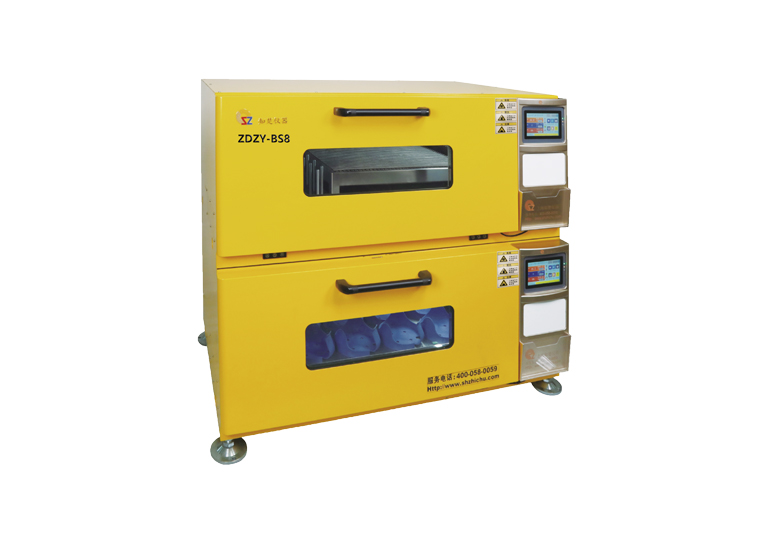
In 2026, bioprocess teams are expected to scale faster, document more, and reduce batch variability — without multiplying labor. Smart bioprocessing is accelerating: connecting sensors, controllers, and data systems so a bioreactor becomes a monitored, automated production asset rather than a manual experiment. This guide explains how IoT connectivity and automation fit into modern bioreactor platforms, including the growing demand for connected bench top fermentor systems in R&D and pilot workflows.
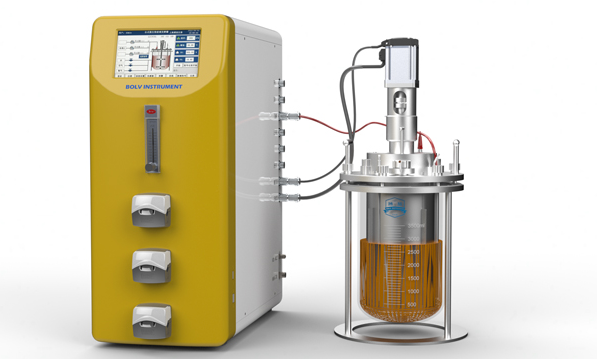
Bench Top Fermentor in 2026: Why Smart Automation Is Becoming Standard
What Is Driving the Shift
Three converging forces are moving smart bioprocessing from specialty capability to baseline expectation in 2026.
| Driver | Operational Consequence | Automation Response |
|---|
| Faster development timelines | Less time for manual data collection and post-run analysis | Real-time data capture; automated trend alerts |
| Staffing constraints | Fewer skilled operators per system; need to run overnight and weekends | Remote monitoring; automated process responses |
| Reproducibility requirements for tech transfer | Batch-to-batch variation must be documented and minimized | Recipe-based control; automatic deviation logging |
| Regulatory data expectations | Complete batch records with timestamps and calibration traceability | Electronic records; audit trail |
Where Variability Currently Comes From in Manual Systems
Inconsistent manual pH correction timing and volume
Variable operator response time to dissolved oxygen (DO) drops
Inconsistent sampling intervals that miss process inflection points
Poor traceability when manual logs are transcribed from handwritten notes
A connected bench top fermentor addresses all four sources simultaneously — by replacing manual actions with automated responses and paper logs with timestamped electronic records.
Bioreactor IoT Architecture: From Vessel Sensors to Dashboard
The Connected Bioreactor Stack
| Layer | Components | Function |
|---|
| Vessel and sensors | pH probe, DO probe, temperature sensor, pressure transducer, foam sensor, level sensor | Measure process state in real time |
| Controller/PLC | Bioreactor control unit; PID loops; actuator commands | Processes sensor data; sends commands to pumps, stirrer, gas valves |
| Local data layer | On-controller data storage; alarm management; recipe execution | Runs the process autonomously between user interactions |
| Gateway/network | Wired or wireless connection to upstream systems | Transmits data from controller to remote systems |
| Dashboard/SCADA/LIMS | Software interfaces for visualization, reporting, and integration | Provides user visibility, batch records, and analysis tools |
Core Parameters to Monitor and Control
Benchtop bioreactors should handle these parameters with closed-loop control and continuous logging:
Temperature: typically controlled to ±0.1–0.5°C; affects growth rate and product quality
pH: controlled by addition of acid and base; typical setpoint accuracy ±0.05 pH units
Dissolved oxygen: controlled via agitation speed, gas flow, or gas composition; critical for aerobic cultures
Agitation: controlled RPM with measurement; often cascaded with DO control
Gas flow: individual mass flow controllers for air, O₂, CO₂, N₂ mixing
Feed rates: pump-controlled additions; time-based, event-based, or feedback-based strategies
Foam and pressure: protective monitoring with automated antifoam response
Connectivity Considerations
Data logging frequency: 1-minute intervals are common for standard processes; 30-second intervals for high-dynamic processes
Time synchronization: all data must carry reliable timestamps for batch record integrity
User roles: operators, scientists, administrators, and read-only viewers each need different access levels
Alarm routing: critical alarms should route to mobile devices for overnight and weekend runs
Bench Top Fermentor Automation: Closed-Loop Control for Yield and Consistency
PID Control and Cascade Strategies
A bench top fermentor with proper automation implements control loops that maintain process conditions without manual intervention.
| Control Loop | Parameter | Typical Strategy |
|---|
| Temperature control | Heating/cooling jacket or resistive heater | PID; tight control with fast response |
| pH control | Acid and base pump dosing | PID with dead-band to prevent over-correction |
| DO control — single cascade | Agitation speed as primary manipulated variable | PID increasing RPM as DO drops |
| DO control — dual cascade | Agitation + gas flow rate | Agitation saturates first; then gas flow increases |
| Feed rate control | Pump speed or on/off timing | Time profile, exponential growth algorithm, or DO-stat |
| Antifoam | Antifoam pump | DO or foam sensor trigger; pulsed addition |
Automation Features That Reduce Labor
| Feature | How It Works | Labor Saved |
|---|
| Recipe execution | Pre-programmed process phases with automatic transitions | Eliminates manual process phase changes |
| Automated feeding profiles | Time-based or growth-rate-based feed profiles run without intervention | Eliminates manual feed addition scheduling |
| Scheduled sampling reminders | System alerts operator at defined intervals | Ensures consistent sampling without manual tracking |
| Antifoam auto-dosing | Foam detection triggers pump automatically | Eliminates monitoring during foaming-prone phases |
| Alarm with mobile notification | Critical deviation sends alert to phone | Allows reduced on-site monitoring during long runs |
The Scale-Up Readiness Benefit
When a bench top fermentor runs automated, recipe-controlled processes, the process data becomes directly useful for scale-up work. The control strategy that produced consistent results at 5 L is documented with sufficient precision to be translated to a pilot-scale system — rather than needing to be reconstructed from variable manual records.
Bioreactor Data Integrity: Batch Documentation and Traceability
Why Data Integrity Is a Bioprocessing Requirement
Data integrity in bioprocessing is not optional — it is the foundation for tech transfer, regulatory submissions, and troubleshooting. A batch record that was manually assembled and hand-transcribed cannot support the same confidence as one generated automatically from the control system.
| Data Integrity Requirement | Manual System Risk | Automated System Solution |
|---|
| Complete process timeline | Manual logs may have gaps during overnight operation | Continuous electronic logging; no operator presence required |
| Alarm and deviation documentation | Manual logs may miss transient events | All alarms logged automatically with timestamp and operator response |
| Calibration traceability | Paper records may not link calibration to specific batch | Electronic calibration log linked to batch record |
| Operator action traceability | Manual log may not capture all interventions | HMI captures all operator inputs with timestamp and user ID |
| Data security | Paper records can be altered without audit trail | Electronic records with audit trail |
What to Log Automatically in a Smart Bioreactor System
All process parameters at defined logging frequency
All setpoint changes with timestamp and user ID
All alarms with severity, trigger value, and time to acknowledgment
All automated events (feed pump activations, antifoam additions, gas flow changes)
All calibration events with pre- and post-calibration values
All operator manual interventions through the HMI
Integration with Analysis and Reporting Tools
Most modern bioreactor control systems offer data export in CSV or structured formats. Better systems offer:
REST API access for integration with LIMS or data analysis platforms
Direct LIMS integration for batch record population
Built-in visualization with overlaid comparison of multiple batch trends
Bench Top Fermentor Buying Checklist: Specifying a Smart System
Technical Specification Inputs
| Parameter | What to Define | Notes |
|---|
| Working volume range | Minimum and maximum operating volume | Bench top fermentors typically .5–30 L |
| Organism type | Bacteria, yeast, mammalian cell, fungal | Determines agitation, aeration, and sterility requirements |
| Process mode | Batch, fed-batch, continuous, perfusion | Defines feeding and control strategy required |
| Required sensors | pH, DO, temperature, pressure, foam, others | Define which are mandatory vs optional |
| Gas mixing needs | Air only; air + O₂; air + CO₂ + O₂ + N₂ | Determines number of mass flow controllers required |
| Sterility expectation | Autoclavable vessel; CIP/SIP | Defines vessel construction and connection design |
Automation Must-Haves for Smart Systems
Recipe-based process control with defined phases and automatic transitions
Remote monitoring access (web or mobile) with alarm notification
Calibration workflow with electronic logging
Export capability for batch data in a standard format
User access control with role-based permissions
Validation and Acceptance Plan
| Validation Step | What It Confirms |
|---|
| Factory acceptance test (FAT) | All specified sensors, controls, and communication functions work as specified |
| Sensor calibration verification | pH and DO probes read correctly against certified references |
| Recipe execution test | Pre-programmed process profile runs without errors; all transitions occur correctly |
| Alarm test | Critical alarm conditions trigger alerts to the defined notification recipients |
| Trial run with your process | Confirm the system maintains your specific setpoints stably under real process load |
Conclusion
Smart bioprocessing is about controlling variability and accelerating decisions. By integrating IoT connectivity and automation into a bioreactor, teams gain real-time visibility, more stable control, and cleaner batch documentation that survives regulatory scrutiny and supports tech transfer. For R&D and pilot work, a connected bench top fermentor—sourced from laboratory equipment manufacturers China—is the fastest way to standardize experiments and build the scale-up-ready datasets that accelerate development timelines.
FAQ
Q1: What is the difference between a bioreactor and a bench top fermentor?
A bench top fermentor is a compact bioreactor designed for laboratory-scale fermentation and process development, typically with a working volume of 0.5–30 L. The term bioreactor applies to both small laboratory systems and large-scale production vessels. In practice, the distinction is primarily one of scale — both use the same fundamental control principles, which is why a well-instrumented bench top fermentor produces data directly relevant to larger-scale process development.
Q2: What does IoT connectivity add to a bioreactor system?
IoT connectivity allows real-time data from the bioreactor sensors and controller to be transmitted to remote dashboards, alerting systems, LIMS, and analysis platforms. The practical benefits are: operators can monitor running processes without physical presence, critical alarms reach responsible personnel immediately regardless of location, batch data is automatically collected without manual transcription, and multiple batches can be compared in analysis tools using clean, structured datasets.
Q3: Which parameters should be automated first in a new bioprocessing setup?
Temperature, pH, and dissolved oxygen control should be automated first because they have the greatest impact on growth rate, product quality, and batch reproducibility. These three parameters are also the most labor-intensive to manage manually — particularly DO, which can require frequent agitation and gas flow adjustments during high-activity growth phases. Automating these three creates the largest immediate reduction in operator burden and batch variability.
Q4: Can automation genuinely improve bioprocess yield and batch-to-batch consistency?
Yes, when implemented correctly. Manual control of pH and DO is inherently reactive and variable — the operator responds after a deviation has already occurred, with a correction volume that depends on judgment. Closed-loop PID control maintains the parameter within a tight window continuously, preventing the magnitude of excursions that manual control allows. Consistent process conditions across multiple runs produce more consistent growth curves and product accumulation, which is the foundation of reliable yield improvement.
Q5: What information should I provide to get an accurate bioreactor recommendation?
Provide the working volume range (minimum and maximum), the organism type (bacterial, yeast, mammalian, or other), the process mode (batch, fed-batch, or other), the required sensors including pH, DO, temperature, and any additional measurements, the gas mixing requirements (air only or multi-gas), the sterility approach (autoclavable vessel or SIP), the data and remote monitoring requirements, and the required integration with any LIMS or data analysis platform.
 English
 日本語
日本語 한국어
한국어 français
 Deutsch
 Español
 русский
 português
 العربية
 ไทย
ไทย tiếng việt