Shanghai Zhichu Instrument Co., Ltd.

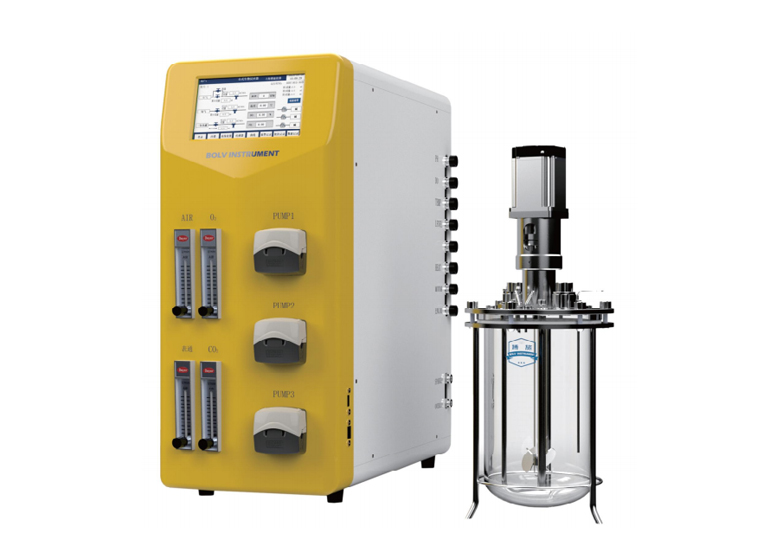
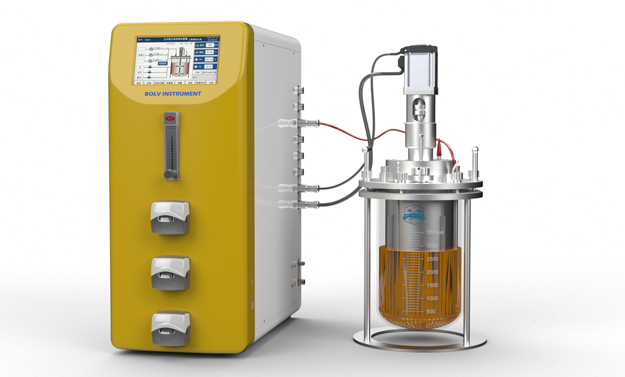
A benchtop bioreactor (also known as a fermentor tank in microbial /cell applications) is a compact, laboratory-scale vessel designed for the controlled cultivation of microorganisms, cells, or tissues under optimized conditions. Benchtop fermentor provides a controlled environment to regulate critical parameters such as temperature, pH, dissolved oxygen (DO), agitation, and nutrient supply, enabling efficient growth and production of biological products. Benchtop bioreactors, like those developed by Zhi Chu, are typically small (e.g., 1–50L capacities), portable, and suited for research and development in laboratory settings, making Zhi Chu a trusted name in lab scale bioreactor innovation.


Key Components and Control Parameters of Benchtop Bioreactor Systems

Key Components and Control Parameters of Benchtop Bioreactor Systems

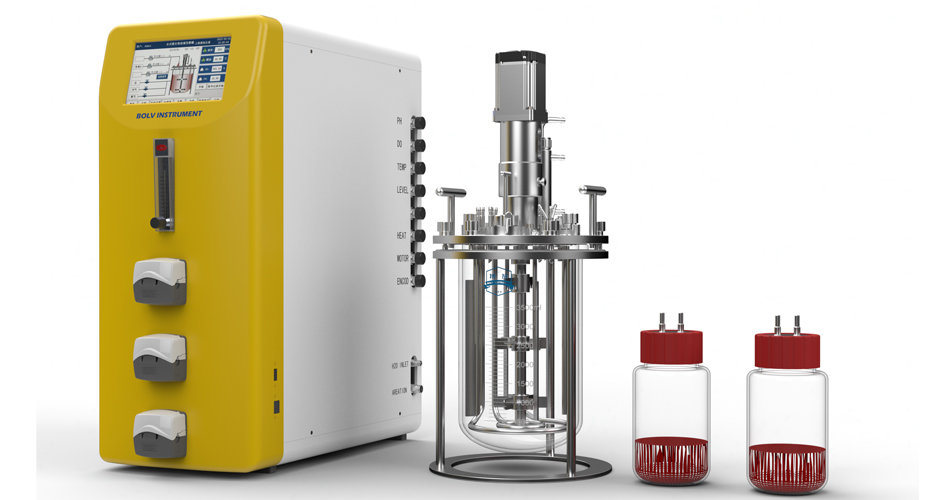
Vessel: Usually made of stainless steel (e.g., 316L) or glass, housing the culture medium and organisms. This core design is common to reliable lab scale bioreactors.

Control System: Often a programmable logic controller (PLC) with a touch screen interface to monitor and adjust parameters like pH, DO, temperature, and agitation speed.

Agitation System: Impellers or stirring paddles ensure uniform mixing and nutrient distribution.

Sensors and Probes: Measure pH, DO, temperature, and other variables in real-time.

Pumps and Feeding Systems: Peristaltic pumps deliver nutrients, acids, bases, or defoaming agents.

Sterilization Features: Autoclavable or in-situ sterilization to maintain a contamination-free environment.


Benchtop bioreactors are versatile, supporting both microbial fermentation (e.g., bacteria, yeast) and cell culture (e.g., mammalian, insect, or plant cells), with configurations tailored to specific applications (e.g., aerobic/anaerobic, suspension/microcarrier cultures). This adaptability makes lab bioreactors essential tools in biotechnology research.


QF and QC Control-Parameter Comparison

A benchtop fermenter should be selected from the complete control architecture rather than maximum vessel volume or maximum rpm alone. Compare pH control, dissolved oxygen control, agitation, impeller type, gas delivery, feeding, temperature regulation, data recording, and utilities under the same process requirements.


Selection ParameterBIOCORE QF Microbial SeriesBIOCORE QC Cell-Culture SeriesSelection Consideration
Published culture routeMicrobial cultivation and fermentationAnimal, insect, and plant cell cultureSelect the series from the biological process before selecting vessel size
Working volume2.1, 3.5, 5.5, or 11 L0.9–2.1, 1.5–3.5, 2–5, or 4–11 LConfirm both starting and maximum liquid volume
pH measurementHamilton Arc electrode; 0–12 pH; ±0.01 accuracyMettler/Hamilton electrode; 0–12 pH; ±0.01 accuracyConfirm the supplied probe brand and replacement requirements
Published pH cascadeAlkali and acidAlkali and CO₂Match the cascade to the culture and media strategy
DO measurementHamilton Arc optical electrode; 0–200%; ±1% accuracyMettler/Hamilton probe; 0–200%; ±1% accuracyConfirm the measurement principle and probe configuration
Published DO cascadeRotational speedO₂, N₂, air, gas flow, and agitation speedCell culture may require a more complex gas-control sequence
Agitation speed20–1000 rpm20–300 rpmSelect according to mixing demand and shear sensitivity
Published impellerDouble-layer six-bladed propellerBed agitator, propeller agitator, or lift agitatorConfirm which agitator is supplied with the quoted model
Gas controlAir with solenoid-valve control and rotameter flow measurementFour-gas control using N₂, O₂, CO₂, and air with a thermal mass-flow controllerDo not assume that both platforms have the same gas-control hardware
Published gas-flow entry0.1–10 L/min or 0.1–25 L/min, depending on configuration0.1–1 L/minConfirm the model-specific flow range in the technical quotation
Liquid feedingAdjustable peristaltic pump, 0–180 rpmFixed-function peristaltic pump, 30 rpm, using 0–100% duty-cycle controlCompare pump functions, quantity, flow calibration, and tubing
Temperature measurementPt100 with PID controlPt100 with PID controlConfirm required setpoint, cooling-water conditions, and actual operating range
Published temperature accuracy0.1°C display entry and ±0.1°C control-accuracy entry0.1°C display entry and ±0.1°C control-accuracy entryEvaluate accuracy under the required process conditions
Control and dataPLC with specialized fermentation program; external USBPLC with specialized fermentation program; USB exportConfirm exported fields, file format, sampling interval, and batch-record requirements
Expansion units listedExhaust CO₂/O₂ analysis, biomass turbidity, glucose measurement, feeding, and weighingExhaust CO₂/O₂ analysis, biomass turbidity, glucose measurement, feeding, and weighingTreat these as configuration items unless the quotation states that they are included


The same vessel size can therefore represent very different process capabilities. For microbial work, review whether the QF series’ higher published agitation range and DO-to-speed cascade fit the oxygen and mixing requirements. For cell culture, review whether the QC series’ lower-speed agitation, agitator options, four-gas control, and broader working-volume range within each vessel size fit the intended process.

Do not assume that every probe, agitator, analyzer, pump, or expansion unit shown in the product information is included in the standard configuration. The quotation should state the supplied hardware for the selected model.


Why Benchtop Bioreactors Matter for Process Development and Scale-Up

Precision and Control: Allows fine-tuning of environmental parameters (pH, DO, temperature, agitation) to maximize yield and product quality in advanced lab bioreactors.

Scalability: Facilitates process optimization at a small scale, reducing risks and costs before scaling to industrial bioreactors.

Versatility: Supports diverse organisms (bacteria, yeast, mammalian cells, algae) and culture modes (batch, fed-batch, continuous), accommodating varied applications.

Compliance: Designed to meet CGMP and FDA standards (as seen in the BioCore QF), ensuring regulatory compliance for pharmaceutical and food applications.

Cost-Effectiveness: Enables cost-efficient R&D by minimizing resource use while providing robust data for process development.

Specific Example: BioCore QF Fermentation System


Why Benchtop Bioreactors Matter for Process Development and Scale-Up

Scale-Up Record Checklist

A bench top fermenter used for process development should generate a complete record of the operating conditions rather than a collection of isolated maximum specifications. Record the actual working volume, impeller, rpm, airflow or gas flow, pH setpoint, DO setpoint, temperature, feeding strategy, cascade sequence, sampling schedule, and process result for every run.

A bench scale bioreactor should not be selected or scaled by nominal vessel volume alone. When comparing the 3 L, 5 L, 7 L/7.5 L, and 15 L models, document which variables will remain constant and which variables will change.


Scale-Up VariableInformation to Record
VesselSeries, model, nominal volume, actual working volume, and vessel geometry
MixingAgitator or impeller type, rpm, and mixing-control method
Gas deliveryGas composition, gas-flow setting, airflow, and control hardware
pH controlSetpoint, probe, control agents, pump assignment, and cascade logic
DO controlSetpoint, probe, agitation cascade, gas cascade, and flow cascade
TemperatureSetpoint, starting temperature, control method, and cooling conditions
FeedingPump, feed material, timing, rate, and total feed volume
CultureOrganism or cell type, medium, inoculation level, and process mode
Process resultBiomass, viability, product result, batch time, and observed deviations
Data sourceUSB record, sampling record, operator record, and test date


kLa and OTRmax can support oxygen-transfer evaluation, but the figures are only meaningful when the test conditions are disclosed. A model-specific result should identify the vessel, working volume, impeller, rpm, gas flow, medium, temperature, measurement method, and test date.

The current public BIOCORE QF and QC technical tables do not list model-specific kLa or OTRmax values. Until verified test data are available, these terms should be presented as process-development criteria rather than as confirmed product-performance claims.

Contact Bosen Pharmaceutical Chemicals Supplier
Contact ZHICHU
Want to Get More Details About Lab Instrument? We're waiting for your contact!
Contact Us
Request a Free Quote