Choosing an ultrasonic disruptor should begin with the working sample volume, vessel geometry, sample type, required processing endpoint, and maximum acceptable temperature rise—not with nominal wattage alone. Probe diameter determines the practical processing range, while the final power and pulse program should be validated against lysis efficiency, product integrity, and sample temperature.
The published ZCPS range includes four configurations: ZCPS-600 with 5–650 W output and a 0.1–600 mL sample capacity; ZCPS-900 with 10–1000 W output and a 0.1–900 mL capacity; ZCPS-1200 with 12–1200 W output and a 1–1200 mL capacity; and ZCPS-1500 with 18–1800 W output and a 1–1500 mL capacity.
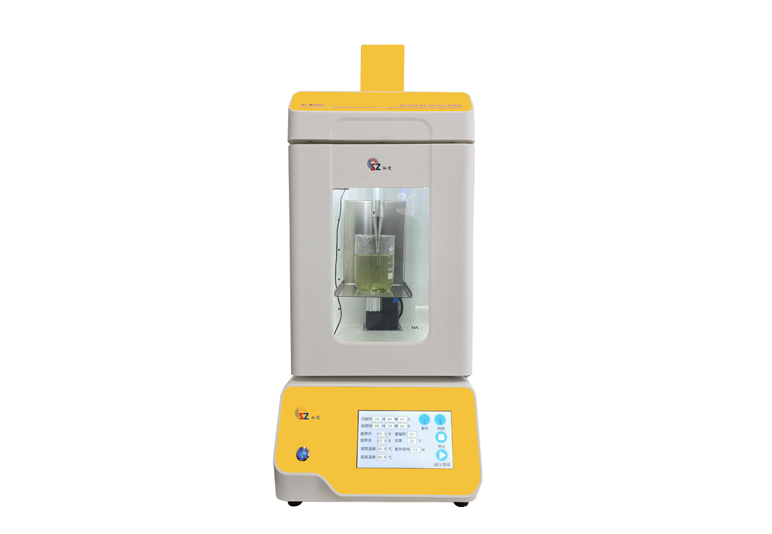
For work up to 600 mL, review the 650W Ultrasonic Cell Disruptor and its ZCPS-600 configuration. Use the table below for initial model and probe selection, then validate the final settings with the actual sample and vessel.
| Working Sample Volume | Probe Diameter | Published Power Ratio and Compatible Models | Pulse Strategy | Cooling Strategy | Typical Applications |
| 0.2–5 mL | Ø2 mm | 1–35%; ZCPS-600, ZCPS-900, or ZCPS-1200 | Use very short intermittent runs and inspect the sample after each cycle | Pre-chill the tube and use an ice-water bath; monitor temperature closely because small volumes heat quickly | Micro-sample method development, DNA/RNA shearing, small-volume cell lysis, and analytical sample preparation |
| 3–10 mL | Ø3 mm | 1–45%; ZCPS-600, ZCPS-900, ZCPS-1200, or ZCPS-1500 | Begin with short pulse intervals and stop once the required endpoint is reached | Use a pre-chilled vessel or ice bath and avoid unnecessary total processing time | Bacterial and yeast lysis, protein extraction, nucleic-acid preparation, and small tissue samples |
| 10–100 mL | Ø6 mm | 1–70%; compatible with all four ZCPS models | Use intermittent operation for heat-sensitive materials and compare disruption efficiency after each stage | Use an ice-water bath or jacketed vessel together with the temperature alarm | Routine microbial cell lysis, protein release, DNA/RNA extraction, homogenization, and sample dispersion |
| 20–200 mL | Ø8 mm | 1–85%; compatible with all four ZCPS models | Process in controlled pulse stages with periodic inspection of the sample | Use external cooling and define a maximum allowable sample temperature before starting | Tissue homogenization, nanoparticle dispersion, emulsification, extraction, and mixed suspensions |
| 30–300 mL | Ø10 mm | 1–90%; compatible with all four ZCPS models | Increase total energy gradually instead of beginning at the upper power limit | Use a chilled or jacketed vessel and monitor temperature throughout the run | Plant or animal tissue homogenization, extraction, emulsification, and larger microbial samples |
| 50–600 mL | Ø12 mm | 10–90%; compatible with all four ZCPS models | Use pulsed or staged processing and verify both temperature and processing uniformity | Active external cooling is recommended for temperature-sensitive proteins, enzymes, and nucleic acids | Larger-volume microbial lysis, protein extraction, suspension homogenization, and particle dispersion |
| 200–750 mL | Ø15 mm | 10–90%; ZCPS-1200 or ZCPS-1500 | Divide the process into controlled intervals and inspect the sample between stages | Use a jacketed vessel or external circulation where temperature control is critical | Medium- to large-batch homogenization, extraction, emulsification, and process development |
| 100–1000 mL | Ø20 mm | 10–90%; ZCPS-1200 or ZCPS-1500 | Use staged processing and confirm that energy is distributed throughout the vessel | External circulation or another validated cooling arrangement is recommended | Larger-volume dispersion, nanomaterial processing, emulsification, liquid degassing, and homogenization |
| 200–1200 mL | Ø22 mm | 20–95%; ZCPS-1200 or ZCPS-1500 | Establish a sample-temperature ceiling and divide the total treatment into repeatable stages | Use continuous external temperature control for heat-sensitive products | Large-batch cell disruption, process-scale homogenization, extraction, and suspension processing |
| 300–1500 mL | Ø25 mm | 30–95%; ZCPS-1500 only | Use staged processing and validate each step before increasing the total energy input | Continuous external cooling and real-time temperature monitoring are strongly recommended | Maximum-volume batch dispersion, emulsification, homogenization, and pilot-scale method development |
The published power ratio identifies the operating range associated with each horn; it is not a universal recommended starting value. Cell concentration, viscosity, vessel shape, probe immersion depth, and the sensitivity of the target material can all change the required energy input.
In procurement documents, the term sonicator cell disruptor may be used as an alternate name for probe-based ultrasonic equipment. The label alone does not determine suitability: working volume, probe diameter, vessel geometry, temperature limit, and the required processing endpoint remain the primary selection criteria.
For a heat-sensitive cell disrupter application, establish a maximum sample temperature before method development. Use short intermittent runs, pre-chilled samples, an ice-water bath or jacketed vessel, and the instrument’s temperature alarm to control heat exposure. Record the actual power, pulse pattern, total processing time, starting and final temperature, sample volume, and result for every validated run.
When evaluating an ultrasonic cell disrupter for repeatable laboratory work, confirm that the supplied horn matches the intended sample volume. Also verify that the system can store operating methods and export run data, especially when the protocol will be transferred between operators or repeated for quality-controlled applications.
When comparing ultrasonic cell disruptor manufacturers, request a model-to-horn compatibility table, documented over-temperature protection, inspection or calibration information, method-storage and data-export functions, warranty coverage, and application support rather than comparing maximum wattage alone.
Do not choose a cell disruptor from a single specification. Send ZHICHU the sample type, working volume, vessel dimensions, target endpoint, current protocol, and maximum acceptable temperature to receive a suitable model and probe recommendation.
 English
 日本語
日本語 한국어
한국어 français
 Deutsch
 Español
 русский
 português
 العربية
 ไทย
ไทย tiếng việt