Biosafety cabinets and laminar flow hoods are two commonly used biological experiment operation platforms in laboratories, with clarifying the laminar flow cabinet function being key to distinguishing their applicability. They have fundamental differences in function and design. To better conduct biological experiments and select the appropriate operation platform for different experiments, laboratory personnel should master the functions and operational precautions of these two devices.
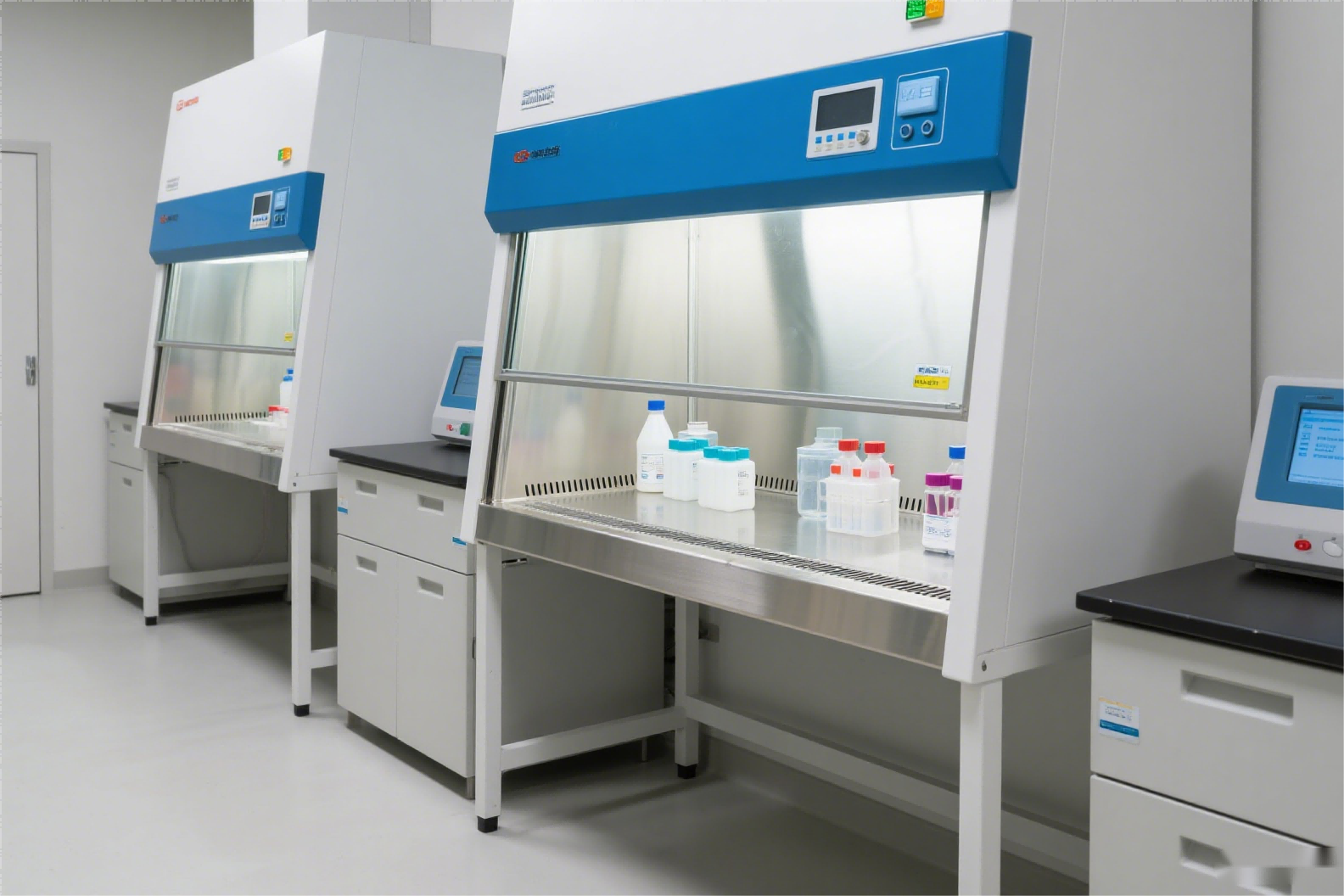
Functions of Biosafety Cabinets
Protect Staff:
Biosafety cabinets protect staff by drawing air out of the cabinet to maintain a negative pressure state inside the cabinet and protect staff through vertical airflow.
Ambient air enters the cabinet through a high-efficiency filter to avoid sample contamination.
Protect Samples and Environment:
Unlike the laminar flow cabinet function which primarily focuses on sample protection through unidirectional clean airflow, the air inside the biosafety cabinet also needs to be filtered through a high-efficiency filter before being discharged into the atmosphere to protect the environment.
Biosafety cabinets are divided into three levels: Class I, Class II, and Class III. Class I and Class II biosafety cabinets can protect staff and the environment, while Class III biosafety cabinets are suitable for high-risk biological experiments.
Operational Precautions for Biosafety Cabinets
Preparation:
Before starting work, the fan of the biosafety cabinet should run for at least 3-5 minutes to self-purify the air inside the cabinet.
Remove all jewelry, wear appropriate personal protective equipment such as lab coats, gloves, goggles, and masks.
Clean the surface contamination inside the biosafety cabinet, disinfect all necessary items before placing them inside the cabinet, ensure the front intake grille is not blocked, and minimize arm movements in and out of the front opening.
During Use:
Move the front window to the working position and wait for the airflow to stabilize.
Keep the working area inside the biosafety cabinet tidy, avoid placing unrelated items, and prevent overcrowding.
Items should be placed as far back as possible but must not block the airway outlet to ensure normal airflow.
Use armrests to increase arm operation freedom and avoid blocking the intake port to maintain safe airflow.
During work, minimize rapid arm movements, minimize the movement of people behind, and avoid rapid door openings and closings to maintain stable airflow inside the cabinet.
Open flames such as alcohol lamps are strictly prohibited during operations inside the cabinet to avoid heat generation that disrupts airflow stability and potential damage to HEPA filters.
Do not open the glass window during experimental operations, and ensure the operator's face is above the working window.
Clean and Disinfect the Surface After Use:
After completing work, tie up the used biological waste bags, clean and disinfect the inner walls, back wall, countertop, and inner side of the front window of the biosafety cabinet.
Before removing your arms from the cabinet, ensure to perform surface disinfection and then slowly remove them perpendicular to the opening of the working area.
Close the glass front window to the appropriate position, set the biosafety cabinet to standby mode, and then press the "Fan" button to turn off the blower.
Expose to UV light for 30 minutes. Note that UV light is harmful to humans, so personal protection should be taken.
Functions of Laminar Flow Hoods
The laminar flow hood draws air through pre-filters into a static pressure box where it is filtered through a high-efficiency filter, and the filtered air is discharged in a vertical or horizontal airflow pattern, achieving ISO Class 5 clean levels in the operation area.
Laminar flow hoods only protect samples, not the operators or the laboratory environment.
Operational Precautions for Laminar Flow Hoods
Preparation:
Check the status indicator; the equipment should be in good condition.
Turn on the fan, clean the surface, remove unused items from the hood, and turn off the fan.
Turn on the UV lamp 30 minutes before use, pull down the dust-proof glass shield, and sterilize the working area.
Turn on the fan and start operations after 5 minutes.
Remove jewelry, wear necessary personal protective equipment for hands, face, or body.
Disinfect the surface of items with alcohol wipes before placing them inside the working area.
During Use:
Do not place unnecessary items in the sample chamber.
During work, only use sterilized and clean reagents and consumables. Avoid frequent movements of people and avoid rapid hand, arm, or body movements in the sample chamber or near the working opening to prevent air turbulence. If using alcohol lamps inside the hood, remember to operate them safely and according to regulations.
Clean and Disinfect the Surface After Use:
Note: Maintaining the cleanliness of the workspace is essential for the long-term laminar flow hood function.
 English
 日本語
日本語 한국어
한국어 français
 Deutsch
 Español
 русский
 português
 العربية
 ไทย
ไทย tiếng việt