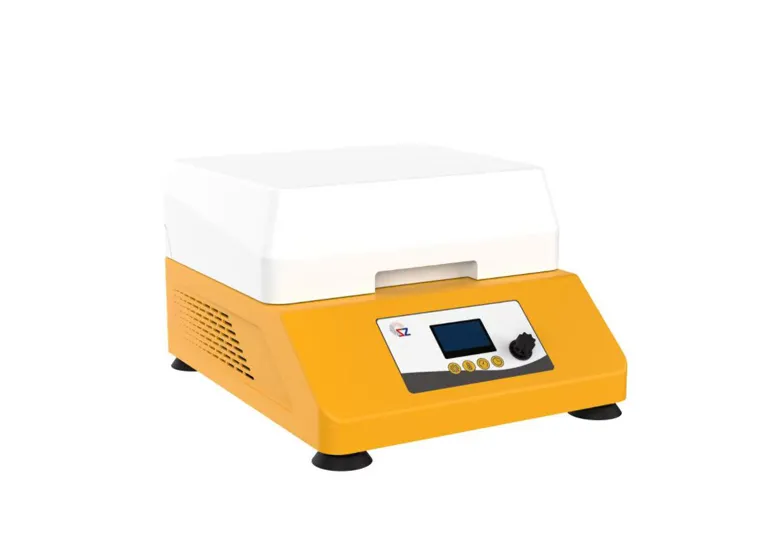
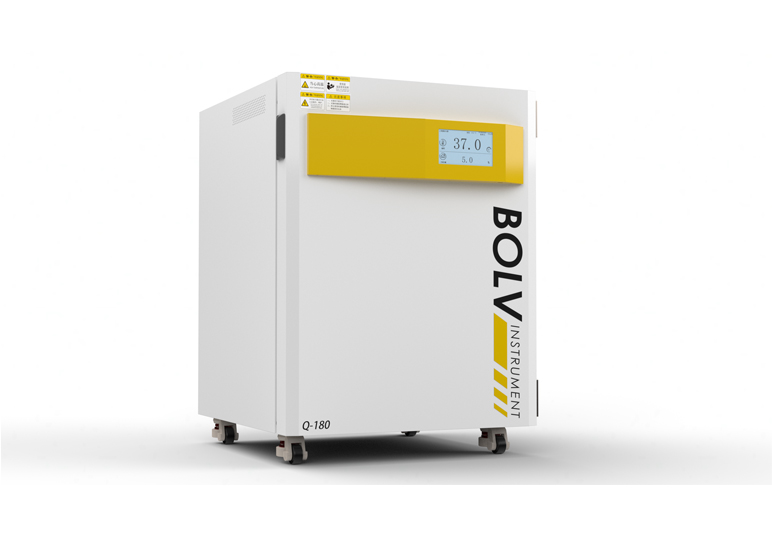
The carbon dioxide incubator is a crucial device in cell culture experiments. It provides a stable environment of temperature, humidity, and CO2 concentration to simulate the growth conditions inside the body. During cell culture, the control of CO2 concentration plays a vital role in cell growth, differentiation, and the accuracy of experimental results. This article will explore the key role of CO2 concentration in cell culture and its effects on cell growth, representing a typical application of co2 incubator in basic biological research.
Principles of CO2 Incubator Operation
The pH value of the cell culture medium is determined by the CO2 concentration. When CO2 enters the culture medium, it reacts with water to form carbonic acid (H2CO3), which further dissociates into hydrogen ions (H+) and bicarbonate ions (HCO3-). This reaction process directly affects the acidity and alkalinity of the culture medium, thereby influencing the cell growth environment. As a core co2 incubator function, precise CO2 regulation helps maintain this chemical balance and supports a stable culture condition. An ideal cell culture environment usually needs to maintain a certain pH value, and the control of CO2 concentration is precisely for maintaining this balance.
This chemical balance explains a key co2 incubator principle: regulating chamber CO2 helps stabilize the pH of bicarbonate-buffered culture media.
Under conventional culture conditions, the CO2 concentration is typically controlled at around 5%. This concentration helps maintain an appropriate pH value of the culture medium, supporting normal cell metabolism and growth. Different types of cells have different sensitivities to changes in pH value, so accurate control of CO2 concentration is critical for ensuring healthy cell growth. This highlights another key application of co2 incubator in supporting diverse cell lines.

Relationship Between CO2 Incubator and Cell Metabolism
Sensitivity of Metabolic Activities:
Cell metabolic activities are very sensitive to the CO2 concentration in the culture environment.
During metabolism, cells consume oxygen and release CO2 through respiration.
Effects of High or Low CO2 Concentration:
When the CO2 concentration is too high, the pH value of the culture medium will decrease, causing acidification of the medium, and cells may experience metabolic disorders or even die.
When the CO2 concentration is too low, the pH value of the culture medium will rise, and cells may be unable to carry out normal metabolic activities due to the lack of an acidic environment.
Effects of CO2 Incubator on Different Cell Types
Rapidly Proliferating Cells:
Some rapidly proliferating cell types, such as cancer cells and certain stem cells, may be more sensitive to changes in CO2 concentration.
Maintaining a stable CO2 concentration helps these cells maintain optimal growth rates and differentiation potential.
Special Cell Types:
For certain special cell types, such as some anaerobic or low-oxygen-requiring cells, the regulation of CO2 concentration is equally important.
Too high CO2 concentration can have an inhibitory effect on these cells.
Precise Control and Application of CO2 Incubators
CO2 incubators ensure that cells are in the optimal growth environment by precisely controlling the CO2 concentration inside the chamber. Modern CO2 incubators are equipped with advanced sensors and regulation systems that can monitor and adjust CO2 concentration in real-time, ensuring it remains at a constant level. Users can set the appropriate CO2 concentration according to their experimental requirements, and the built-in system of the incubator will automatically adjust it. This demonstrates the broader application of co2 incubator in achieving reproducible and reliable cell culture outcomes. A key function of co2 incubator in cell culture is to maintain a stable CO2 environment that supports consistent culture conditions throughout an experiment.
Conclusion
Precise CO2 regulation in incubators is vital for pH balance, cell metabolism, and stable growth. Leading incubator shaker manufacturers like ZHICHU deliver advanced control and reliable agitation to optimize culture environments and support precise biological research.
 English
 日本語
日本語 한국어
한국어 français
 Deutsch
 Español
 русский
 português
 العربية
 ไทย
ไทย tiếng việt