In 2026, faster project cycles and shared multi-team lab spaces are pushing many sites to standardize on a single hood type across workflows. That pressure is creating a persistent and genuinely dangerous mistake: using a laminar flow cabinet — a clean bench designed for product protection — to handle hazardous biological samples that require a biosafety laminar flow hood with full containment capability.
The distinction matters more than most procurement checklists acknowledge. A laminar flow cabinet delivers HEPA-filtered unidirectional airflow across the work zone to protect the sample or workpiece from particulate contamination. It does not protect the operator. It does not protect the environment. In a shared 2026 lab where multiple teams are working with different sample types under time pressure, the wrong cabinet choice is not a quality issue — it is a laboratory safety compliance issue with real consequences for personnel, audit outcomes, and institutional liability.
This article draws a clear line between the two equipment categories, explains how a laminar flow cabinet achieves ISO Class 5 air cleanliness for the applications where it is the correct choice, and provides a practical selection and maintenance framework for procurement teams who need to get this decision right the first time.
BSC vs Laminar Flow: The Protection Boundary You Must Get Right
The fundamental difference between a laminar flow cabinet and a biosafety cabinet is not size, price, or brand — it is the direction and containment intent of the airflow, and what that airflow is designed to protect.
Laminar Flow Cabinet: Product Protection
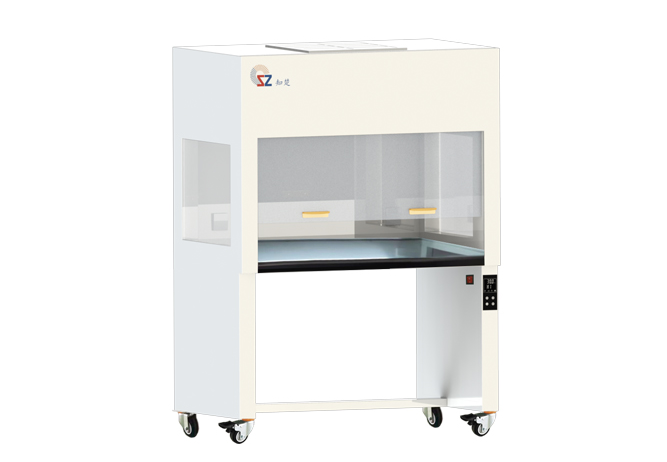
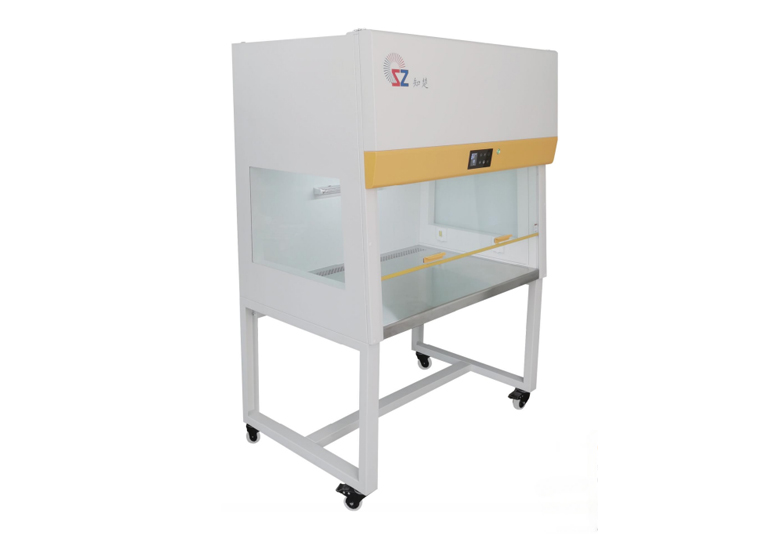
A laminar flow cabinet — also called a clean bench — draws room air through a prefilter and a HEPA filter, then delivers that filtered air as a stable, unidirectional stream across the work surface. The airflow moves from the filter face toward the operator, sweeping particles away from the work zone and maintaining a low-particulate environment around the sample or workpiece.
This design is highly effective for protecting non-hazardous samples and products from contamination. It is not designed for containment. The airflow moves toward the operator, which means any aerosol or particulate generated by the work process — including from biological samples — is directed outward into the lab environment and toward the person working at the bench.
Using a laminar flow cabinet for infectious agents, unknown clinical samples, or aerosol-generating biological procedures exposes the operator and the surrounding environment to the materials being handled. This is not a marginal risk — it is a fundamental misapplication of the equipment.
Biosafety Cabinet: Personnel, Environment, and Product Protection
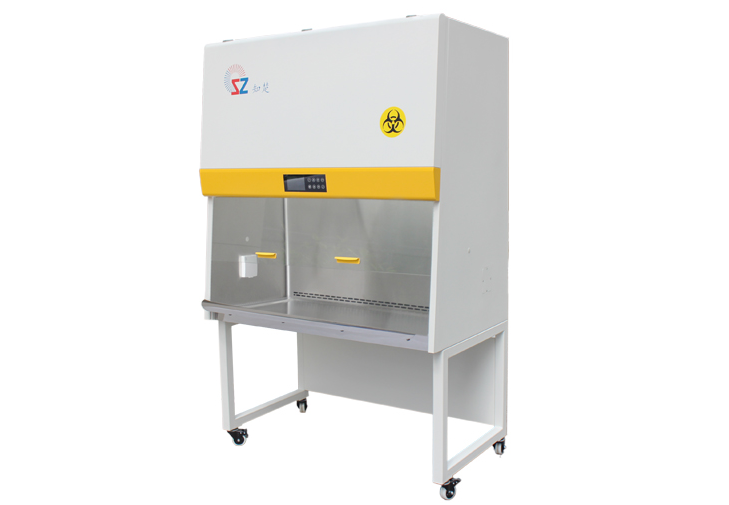
A biosafety cabinet (BSC) uses a different airflow architecture designed for containment. Room air is drawn inward through the front opening, preventing aerosols from escaping into the lab. Downflow HEPA-filtered air protects the work surface. Exhaust air passes through HEPA filtration before recirculation or discharge. The result is a three-way protection system: personnel, environment, and product.
BSCs are classified by protection level (Class I, II, III) and are the correct choice for work with mammalian cell culture, microbial agents, and any biological material that presents an inhalation or exposure risk.
The 2026 Compliance Message
In 2026 lab environments, the pressure to standardize equipment and reduce procurement complexity is real. But standardizing on a laminar flow cabinet for all hood-based work — including biological applications that require containment — creates compliance exposure that no cost saving justifies. The correct approach is to match the equipment to the risk classification of the work, not to the convenience of the procurement process.
ISO Class 5 Air Cleanliness: How a Laminar Flow Cabinet Achieves Clean Bench Performance
For the applications where a laminar flow cabinet is the correct choice, understanding how it achieves and maintains ISO Class 5 air cleanliness is the foundation for both procurement and ongoing performance management.
Airflow Principle
The airflow path in a laminar flow cabinet follows a consistent sequence:
Room air enters through an intake grille and passes through a prefilter that captures larger particles — dust, lint, and coarse debris — before they reach the main filter. This extends HEPA filter life and maintains consistent airflow resistance over time.
Prefiltered air then passes through a HEPA filter rated to capture 99.97% or better of particles at 0.3 microns. The filtered air exits the HEPA face as a stable, unidirectional laminar stream across the work surface, maintaining consistent velocity and direction to sweep particles away from the work zone.
The result is a work environment classified at ISO Class 5 — equivalent to the older Class 100 designation — meaning no more than 3,520 particles per cubic meter at 0.5 microns or larger. This cleanliness level supports low-particle operations including sterile media preparation, sensitive assembly, and non-hazardous sterile transfers.
What ISO Class 5 Means in Practice
ISO Class 5 air cleanliness is a meaningful performance specification for product protection applications. It is not, however, a biosafety containment specification. The ISO classification describes the particulate cleanliness of the air in the work zone — it says nothing about the direction of airflow relative to the operator, the containment of aerosols generated during work, or the protection of personnel from biological hazards.
This distinction is critical for procurement teams evaluating both equipment types. A laminar flow cabinet that achieves verified ISO Class 5 performance is correctly specified for non-hazardous product protection work. The same cabinet is incorrectly specified for any work involving biological hazards, regardless of its ISO class rating.
Product Protection Clean Bench Use Cases: Where Laminar Flow Cabinets Win on Cost and Simplicity
When the application is correctly matched to the equipment, a laminar flow cabinet delivers ISO Class 5 product protection with lower acquisition cost, simpler installation, and less operational overhead than a biosafety cabinet. These are the applications where that match is correct.
Non-Hazardous Media and Buffer Preparation
Preparing sterile culture media, buffers, and reagents for downstream biological work is a high-frequency lab task that benefits from ISO Class 5 air cleanliness to prevent particulate contamination of the prepared materials. When the materials being prepared are not themselves hazardous — and the work does not involve infectious agents or aerosol-generating procedures — a laminar flow cabinet is the appropriate and cost-effective choice.
Sterile Transfers for Low-Risk Workflows
Transferring non-hazardous materials between containers, dispensing sterile liquids, and handling sterile consumables in a low-particle environment are all appropriate laminar flow cabinet applications. Site EHS policy should confirm the risk classification of the specific materials and procedures before specifying the equipment.
Electronics and Optics Assembly and Inspection
Dust-sensitive manufacturing and inspection operations — PCB assembly, optical component handling, precision mechanical assembly — benefit from ISO Class 5 air cleanliness to prevent particulate contamination of sensitive surfaces. These applications have no biological hazard component, making a laminar flow cabinet the correct and cost-efficient choice.
The Cost Advantage
A laminar flow cabinet for non-hazardous product protection work costs less to purchase, less to install, and less to operate than a biosafety cabinet. BSCs require more complex airflow management, more frequent certification, and in some configurations, dedicated exhaust connections. When containment is not required, specifying a BSC adds cost and complexity without adding relevant protection. The correct procurement decision is to match the equipment to the actual risk — not to overbuy containment capability that the application does not need.
Installation and Selection Guide: Choosing the Right Laminar Flow Cabinet and When to Specify a BSC
Decision Checklist
Use this four-step process to confirm the correct equipment specification before procurement:
Step 1 — Risk classification
Are you handling infectious agents, unknown clinical samples,
or performing aerosol-generating biological procedures?
If yes: specify a biosafety cabinet. Do not proceed with a laminar flow cabinet.
If no: proceed to Step 2.

Step 2 — Process need
Is your goal strictly product protection from dust, bioburden,
or particulate contamination of non-hazardous materials?
If yes: a laminar flow cabinet is likely the correct choice.
Confirm with site EHS before finalizing.

Step 3 — Key specifications for laminar flow cabinet procurement
- ISO class target: confirm ISO Class 5 (Class 100) and verification method
- Work zone dimensions: internal width, depth, and height; ergonomic reach distance
- Filter specification: HEPA grade, prefilter type, replacement access design
- Airflow velocity and stability: confirm uniformity across the work surface
- Noise level: relevant for shared lab environments and extended use
- Materials and cleaning: stainless steel or coated surfaces compatible with
  disinfectants used in your protocols
- Illumination: adequate lux level for detailed work

Step 4 — Installation requirements
Confirm bench footprint and load capacity, power supply requirements,
clearance for filter access and maintenance, and placement away from
doors, supply air vents, and high-traffic areas that can disrupt
laminar airflow stability.
When the Answer Is a Biosafety Cabinet
If Step 1 identifies any biological hazard, aerosol potential, or unknown sample risk, the correct path is a biosafety cabinet regardless of cost or convenience. The functional differences between a laminar flow cabinet and a biosafety laminar flow hood are not a matter of degree — they are a matter of airflow direction and containment intent. No amount of HEPA filtration in a clean bench compensates for the absence of inward airflow containment when working with hazardous biological materials.
For teams that need guidance on the specific BSC class appropriate for their biosafety level and application, the functional differences between biosafety cabinets and laminar flow hoods are covered in detail in the Zhichu technical resource library.
Maintenance and TCO: Keeping ISO Class 5 Performance Without Surprise Costs
Routine Maintenance Schedule
| Maintenance Activity | Frequency | Purpose |
|---|
| Prefilter inspection and replacement | Monthly or per manufacturer schedule | Maintains airflow resistance within design range; extends HEPA life |
| HEPA integrity testing | Annually or after filter replacement | Confirms ISO Class 5 performance; required for audit documentation |
| Airflow velocity verification | Quarterly or after any maintenance event | Confirms laminar flow stability across work surface |
| Interior surface cleaning | Per protocol and after each use | Prevents particulate buildup; maintains cleanliness classification |
| UV lamp inspection (if equipped) | Per manufacturer schedule | Confirms germicidal output for surface decontamination |
| Fan and motor check | Annually | Confirms consistent airflow delivery; identifies early wear |
TCO Drivers
The total cost of ownership for a laminar flow cabinet is dominated by filter lifecycle costs, downtime from contamination events, and the cost of rework when product protection fails.
Prefilter replacement is the highest-frequency maintenance cost and the most effective lever for extending HEPA filter life. A prefilter that is changed on schedule prevents premature HEPA loading, which would otherwise require early replacement of the more expensive main filter and a recertification event.
Contamination events — when ISO Class 5 performance is not maintained and product is compromised — are the most expensive failure mode. A single contamination event that requires discarding a batch of prepared media, repeating a sterile transfer sequence, or investigating a failed assembly inspection can cost more than a full year of routine maintenance. Treating the laminar flow cabinet as a controlled process tool — with documented airflow checks, filter change records, and cleaning logs — protects against these events and supports audit readiness.
2026 Operational Best Practice
In 2026 labs operating under quality management systems or regulatory oversight, the laminar flow cabinet should be treated as a controlled instrument with a documented maintenance and calibration record. Airflow verification data, filter change history, and cleaning logs provide the audit trail that demonstrates ISO Class 5 performance is being actively maintained — not assumed. This documentation also supports investigation when contamination events do occur, by confirming whether the cabinet was performing within specification at the time.
Decision Flow: Laminar Flow Cabinet vs Biosafety Cabinet
Alt text: Decision flow for choosing a laminar flow cabinet versus a biosafety cabinet based on sample hazard classification and protection goals, showing ISO Class 5 clean bench path for non-hazardous work.
Caption: Start with risk classification — laminar flow cabinets deliver ISO Class 5 product protection for non-hazardous applications; biosafety cabinets add containment airflow for personnel and environment protection when biological hazards are present. Using the wrong cabinet is a laboratory safety compliance issue, not a quality preference.
Conclusion
In 2026, the safest procurement decision is also the most straightforward: use a laminar flow cabinet for ISO Class 5 product protection work where no biological hazard is present, and specify a biosafety cabinet when personnel and environment containment is required. The two equipment categories are not interchangeable, and the consequences of mixing them up — contamination events, compliance findings, and personnel exposure risk — are avoidable with a clear selection process.
<p style="margin: 0px 1em 1rem; padding: 0px; color: rgb(31, 35, 40); font-family: -apple-system, BlinkMacSystemFont, "Segoe UI", "Noto Sans", Helvetica, Arial, sans-serif, "Apple Color Emoji", "Segoe UI Emoji"
 English
 日本語
日本語 한국어
한국어 français
 Deutsch
 Español
 русский
 português
 العربية
 ไทย
ไทย tiếng việt